

Annual Report 2025

Support Us
Anyone Can Take an Extra Step to Make a Child’s Life Better

Denisa Nine is a Senior Customer Success Manager at UiPath, where she has worked for seven years.
In 2025, she was one of the Foundation’s most dedicated volunteers. She participated in the U&I Summer Camp for the first time and served as a trainer for the Introduction to Artificial Intelligence course for high school students in the Own Your Path program.
She has already decided that next summer she will return to the camp to once again serve as a mentor to middle school students. In the meantime, she wants to convince her colleagues to follow her example because “anyone can take an extra step to make a child’s life better”.
Here is her experience, as told in an edited interview.
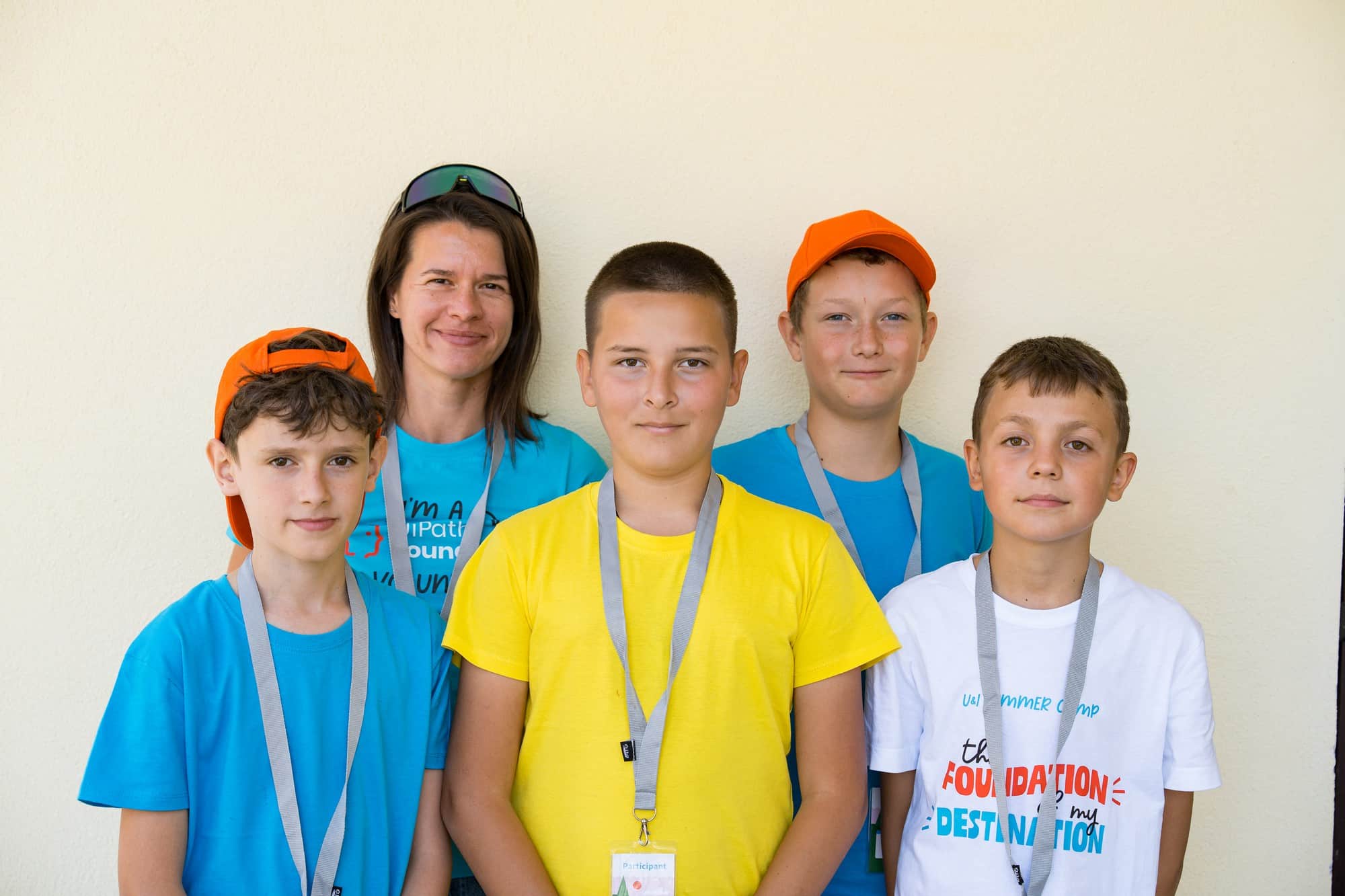
Last year, the opportunity arose to volunteer in the summer camp because I knew of other close colleagues who had already done so. They came back thrilled and told me all about it; it seemed like the camp had been the highlight of their summer. So in 2025, I decided to make time for it too.
I think it’s valuable to be a mentor to middle schoolers, to give some of your time and experience – even if just for a week – to support them in what lies ahead in their lives and in making the right choices. Last year, I mentored four boys who were so calm and well-behaved. I noticed at camp that some children are much shier and may be distrustful of people and find it harder to open up. But you observe them, you read them, and you start making connections: you show the child that they have something in common with the one next to them. You tell them, “Look, he’s like this; you two have that in common.” And by the end of camp, that same child who wouldn’t say a word ends up making friends, talking, and being part of the group.
“I became the person I needed.”
In the last few days of camp, when everyone was upset that it was ending, I took the boys on a walk to the river. I gave them a project to work on so they could present it at the next camp. I suggested that until we meet again, whenever they’re sad or miss each other, they should work on building a little boat. And next summer, we’ll have a race on the river with the boats they’ve built.
I feel that the camp made me realize that I’ve become the person I needed when I was the age of the children I met. I understood that I saw myself around that time, and I tried to be, taking each child’s personality into account, the person I would have needed. When I received the Christmas letters from the children I had mentored at camp, I noticed a common word in them: friend.
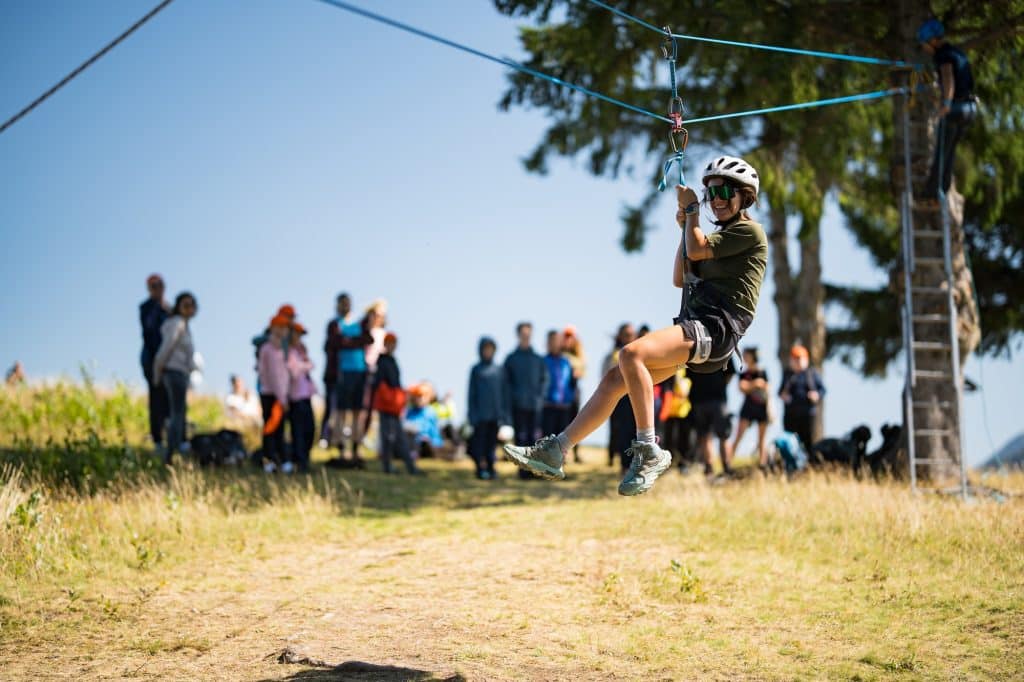
The AI Course: An Hour and a Half That Matters
As a trainer for the Introduction to Artificial Intelligence course for high
school students, I volunteer around four hours a week: an hour and a half with the students, and the rest in preparation. But the fact that I log in at 8:30 in the morning and the kids come to listen to me and see a different kind of teaching – that’s all that matters.
I try to create a positive atmosphere in class, to stay warm and smiling, and tell jokes, just as I do in any other professional setting.
I try to encourage them by telling them right from the start that we shouldn’t be afraid of technology, that this fear is actually a fear of change – and we all have it. Fear arises when you’re in unfamiliar territory. I explain basic concepts to them: what happens when you click ‘allow cookies’ on a website, or why you shouldn’t give your personal data to just anyone who asks for it online. I show them that, unless you’re in a bank or a hospital, you have no reason to give out your personal data, and it’s okay to ask for an explanation from anyone who requests it.
One example that changed their perspective was related to social media. When I asked them why they think such networks exist, most said it was for socializing and finding or keeping friends. So I pressed them and asked, Why do they collect all this data about you? What do you ‘like’? What’s the ultimate goal? They began to understand that everything they do – following certain accounts, personalizing their content – helps these networks stay as up-to date as possible with their needs, so they can monetize their attention online. That was a shift in their way of thinking. They took a step back and realized they could be more mindful of what they do on social media, so they could, in turn, control and shape the technology.
The fear of AI technology in Romania is a challenge.
I explained to them that conversational AI platforms can give them incorrect answers when they don’t know how to guide them. It’s safe to use AI if they know how to do it, what information to provide, and what to ask for. After they tried it, I recommended that they go to their grandparents or parents to teach them, to explain that there’s nothing wrong with trying and that it’s natural to adapt to change.
I support, and have always supported, people who make an effort for the good of others, people who help others. In this case, the Foundation’s team supports children in making a positive impact on their lives. So, whenever I can, I’ll join in too. Plus, I’ve become an ambassador inside the company and am encouraging my colleagues to become UiPath Foundation volunteers too: “Hey, what are you doing tomorrow? Don’t know what you’re doing? I’ll tell you what you’re doing.”

About a Light that Travels Further
…but also about what happens when a light is shared freely.
In May 2025, we did something we had never done before. We gave something away: the AI Generation curriculum, available in Romanian and English, free for any teacher anywhere in the world to use and adapt.
We developed the curriculum in partnership with the App Inventor Foundation, aligned it with UNESCO’s AI Competency Framework for Students and published it under a Creative Commons Attribution-ShareAlike 4.0 International license.

Ways to Get Involved
Get the
2025
Annual Report
Share on
Social Media
Support Us